
It was supposed to be another ordinary day for Microsoft employees around the world. Engineers logged into Teams, designers reviewed their Jira boards, and project managers prepared sprint reports. But by midday, a shadow loomed larger than any meeting on the calendar.
In July 2025, Microsoft announced the termination of 9,000 employees worldwide—about 4% of its total workforce. That number sounds clinical, almost detached. But behind that number are real lives. People with routines, hopes, families, rent due, children in school, visas tied to their employment, and dreams built on the belief that Microsoft was a stable, secure, and future-facing home.
What went wrong? Or perhaps more accurately, what changed?
A Company in Transition: The AI-Driven Rebirth of Microsoft 🤖
Microsoft isn’t in crisis. It’s not hemorrhaging profits. Quite the opposite—Q3 reports showed revenues of $70 billion, a strong 13% year-over-year growth, and healthy margins. And yet, despite financial strength, Microsoft has become one of the boldest players in a ruthless game: reshaping its identity around Artificial Intelligence.
The company is now channeling more than $80 billion into AI research, infrastructure, and partnerships, with heavy investments in its Azure AI Cloud, Copilot features across Office apps, and Open AI-backed projects.
That pivot came at a human cost. Entire departments were deemed redundant. Some because their work overlapped with new AI tools, others because they didn’t fit the company’s vision anymore.
The main drivers behind the layoffs:
- Aggressive AI-first restructuring to prioritize long-term scalability.
- Cutting non-AI focused divisions such as traditional sales teams and middle management layers.
- Refocusing resources away from experimental creative projects toward AI products with high ROI.
- Shutting down game development pipelines that were no longer seen as essential to the company’s growth.
So even while Microsoft grows, it’s also pruning—cutting off parts of itself that no longer fit the future it’s chasing.
If you’re interested in how AI is transforming the world of work and leaving many behind, you might also want to explore:
👉 The Future of AI and Jobs — What You Can Do to Stay Relevant
Gaming’s Great Loss: Xbox Studios in the Crosshairs 🎮💀
For gamers and developers alike, the hardest emotional hit came from what happened within Xbox Game Studios. While the Xbox brand has struggled to keep pace with Sony’s PlayStation globally, it always had one saving grace—its creative ambition. That ambition, sadly, has become collateral damage.
Studios affected included:
- Rare Studios – The creative force behind titles like Sea of Thieves saw staff slashed and the mysterious, long-gestating game Everwild officially canceled.
- Turn 10 Studios – Known for the Forza franchise, they lost key team members mid-development cycle.
- The Initiative – The group working on the highly anticipated Perfect Dark reboot was completely dissolved.
- Undead Labs and Compulsion Games – Facing internal restructuring and project halts.
These aren’t just studios—they’re homes for creative minds. People who’ve spent years crafting characters, building worlds, writing code, and fighting feature creep, only to see their work thrown away in an instant. There’s no “undo” button for a canceled dream.
Online, the impact was visceral. Developers posted goodbye threads on Twitter/X. Fans mourned canceled titles like they would unfinished novels. The Perfect Dark reboot alone had a cult following waiting for years. That silence? It now feels permanent.
If you’re passionate about digital preservation and why gaming worlds matter beyond the screen, take a look at:
🎮 Stop Killing Games: Why Digital Worlds Deserve to Survive
The Layoff Experience: A Masterclass in Cold Execution 🧊

The way Microsoft conducted the layoffs added insult to injury for many employees. Despite the company’s legacy of leadership, many affected workers described the experience as emotionally jarring and impersonal.
Common stories included:
- Calendar invites with cryptic titles like “Team Realignment Briefing” or “HR Check-In.”
- Emails sent late at night informing people of job loss with a generic message of appreciation.
- No personal communication from team leads or managers—just corporate HR representatives reading from scripts.
- Immediate revocation of access to internal systems, cutting people off from work they’d spent years building.
One product designer posted:
“I spent 7 years designing user experiences for Microsoft Teams. I didn’t even get a proper goodbye. Just an email and a link to severance documents. It’s like I never existed.”
These aren’t people being fired for misconduct or poor performance—they’re being let go because their jobs don’t align with a future driven by AI priorities.
Instead, they found themselves locked out of their virtual desks—just another casualty in a corporate pivot.
The Human Fallout: Families, Visas, and Emotional Collapse 🏠
The ripple effects go beyond employees themselves.
For workers on temporary visas, particularly H1B holders in the U.S., layoffs triggered a countdown to deportation. Many now face:
- 60-day deadlines to find new employment or leave the country.
- Complex immigration red tape, made worse by the job market tightening across tech.
- Emotional strain on families who had settled in the U.S., paying mortgages and building a life.
Imagine moving halfway across the world to work at your dream job—only to lose it without warning, and now face the prospect of starting over again, in a different country.
A software engineer from India shared anonymously:
“I just bought a car. My wife is pregnant. And now we might have to return home. I gave everything to this company.”
These are not numbers. These are human lives uprooted in an instant. The emotional toll—stress, anxiety, shame, and confusion—is something spreadsheets can never measure.
This kind of stress can also trigger long-term mental health issues. If you or someone you know is struggling, you might find this helpful:
Tech’s New Era: Winners, Losers, and the Vanishing Middle 🧠📉
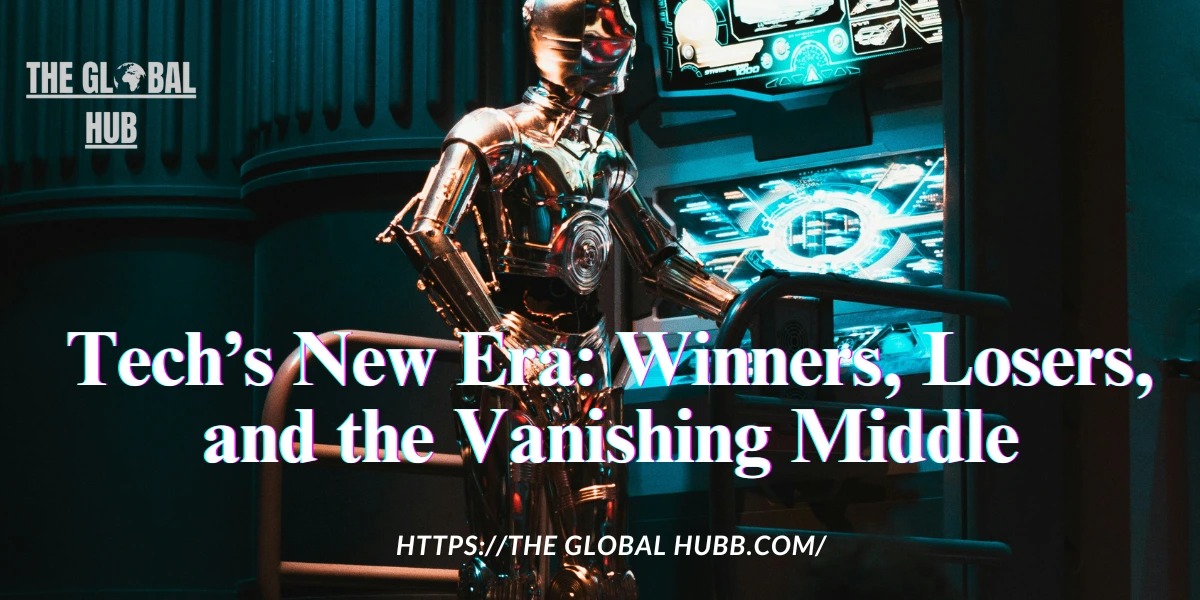
What makes the Microsoft layoffs more haunting is their symbolic meaning. In Silicon Valley and beyond, they signal the death of the middle-tier role.
Here’s what’s happening across the tech space:
- Junior roles are now being replaced or augmented by AI tools like GitHub Copilot, Midjourney, and ChatGPT.
- Mid-level project managers and analysts are deemed “non-essential” and often first on the chopping block.
- Top engineers and AI scientists are being paid more than ever—upwards of $900k per year in some cases.
What remains is a two-tier system:
- High-performing “builders” (AI engineers, product owners, infrastructure architects).
- And everyone else walking a tightrope.
This shift is terrifying for the majority of tech professionals who no longer know where they stand.
Reskilling, Retooling — and a Lot of Uncertainty 🛠️🌫️
To ease the pain, Microsoft has promised support. Severance packages, reskilling boot camps, mental health programs, and internal mobility opportunities are all part of the post-layoff care.
But many see these as performative, not preventative.
The support offered includes:
- 3-6 months of severance pay, depending on seniority.
- Healthcare extension in the U.S. for up to 6 months.
- Upskilling vouchers and access to LinkedIn Learning, Pluralsight, and Coursera.
- Job fairs and priority internal listings for re-hiring.
However, few laid-off workers are optimistic. The same system that let them go is unlikely to suddenly offer them a place again.
One former designer put it bluntly:
“They gave me LinkedIn Premium and a voucher for online courses. What I needed was a reason not to feel disposable.”
This is the part of layoffs we rarely talk about—the psychological damage. The feeling that your years of effort didn’t mean anything. The fear that no matter how good you are, you’re never really safe.
The Emotional Weight: Burnout, Guilt, and Survivor’s Anxiety 🧠🪫
Even those who weren’t laid off feel the weight. This phenomenon is known as “survivor’s guilt”—a strange mix of relief and remorse.
Remaining employees now face:
- Increased workloads due to leaner teams.
- Unspoken fear about their own job stability.
- Less collaboration and more competition as roles become zero-sum.
- Mental fatigue and burnout, made worse by the emotional strain of losing close colleagues.
In one internal memo, a manager wrote:
“We used to joke about working like family. Now it feels like a battlefield. Everyone’s just trying to stay useful.”
The Broader Ethical Question: What Does Tech Really Stand For? 🤔
Microsoft has long branded itself around values—“Empowering every person and organization on the planet.” But when thousands are laid off in the name of efficiency, that motto begins to feel hollow.
The question isn’t just about headcount.
It’s about ethics.
It’s about humanity.
It’s about what we’re willing to trade in the name of innovation.
When a company chooses algorithms over artists, speed over soul, are we truly progressing? Or just automating our way into isolation?
What Can Be Done? A Call to Leaders and Workers Alike 🚨
We can’t stop technological advancement—but we can shape how it impacts us. Here’s what must happen:
- Leaders need to prioritize empathy, not just EBITDA.
- Transparent communication must become a cultural standard in corporate layoffs.
- Governments need updated labor protections for tech workers—especially immigrants.
- Employees must diversify their skills, learning not just AI, but human-centered abilities like storytelling, ethics, leadership, and strategy.
- Communities should step in with networking, support groups, mental health help, and peer-led boot camps.
Because if corporations won’t protect workers, we must protect each other.
A Wake-Up Call for All of Us 📣
Whether you work in tech or not, Microsoft’s layoffs tell us something urgent about the future of work:
- Stability is an illusion in the AI age
- Value is being measured more by efficiency than effort
- Human creativity is being sacrificed for machine productivity
- Job roles are becoming obsolete overnight
It’s not about being good—it’s about being strategic. And if you’re not aligned with where a company is going, you might not be going there with it.
That sounds bleak, but it’s also a wake-up call. It’s time we start thinking about how to make ourselves future-ready—not just with technical skills, but with emotional strength, adaptability, and creative confidence.
So… What Does Microsoft Stand For Now?
Microsoft has long said its mission is to “empower every person and organization on the planet.” But when empowerment comes at the cost of 9,000 jobs, it forces us to ask: what kind of power are we really building?
Are we racing so fast toward the future that we forget to bring people along?
Are we building intelligent machines while abandoning the humans who taught them everything they know?
Progress isn’t just about innovation—it’s about values. And the way we treat people during change says everything about who we are becoming.
Conclusion: Let’s Not Lose the People in the Process 💬
The 9,000 Microsoft employees laid off in July 2025 weren’t just doing jobs—they were shaping the digital world. From gaming universes to cloud infrastructure, from school apps to enterprise solutions, they helped build the tools we all use every day.
To dismiss them as “restructured” is to ignore the heartbreak, talent, and humanity behind every badge that was turned in.
Microsoft may be racing toward the future, but we must not leave compassion behind. Because at the end of the day, every byte of progress comes down to a human hand that built it.
And those hands deserve more than a system prompt saying: “You’re no longer needed.”
Suggested Reads from Our Blog
- Stop Killing Games: Why Digital Worlds Deserve to Survive
- Mental Health in Tech: Surviving Burnout in a Machine-First World
- Future of AI & Jobs: What You Can Do to Stay Ahead
What Do You Think?
How do you feel about Microsoft’s choice?
Do you think it was required? Or was there a more humane way to handle things?
We would be delighted to hear from you. Join the discussion on our social media channels or leave your thoughts in the comments section